Kule Film Studios XR Stage LED Screen Installation
- Client:
- Kule Film Stüdyosu
- Location:
- Ankara
- Date:
- 9/1/2026
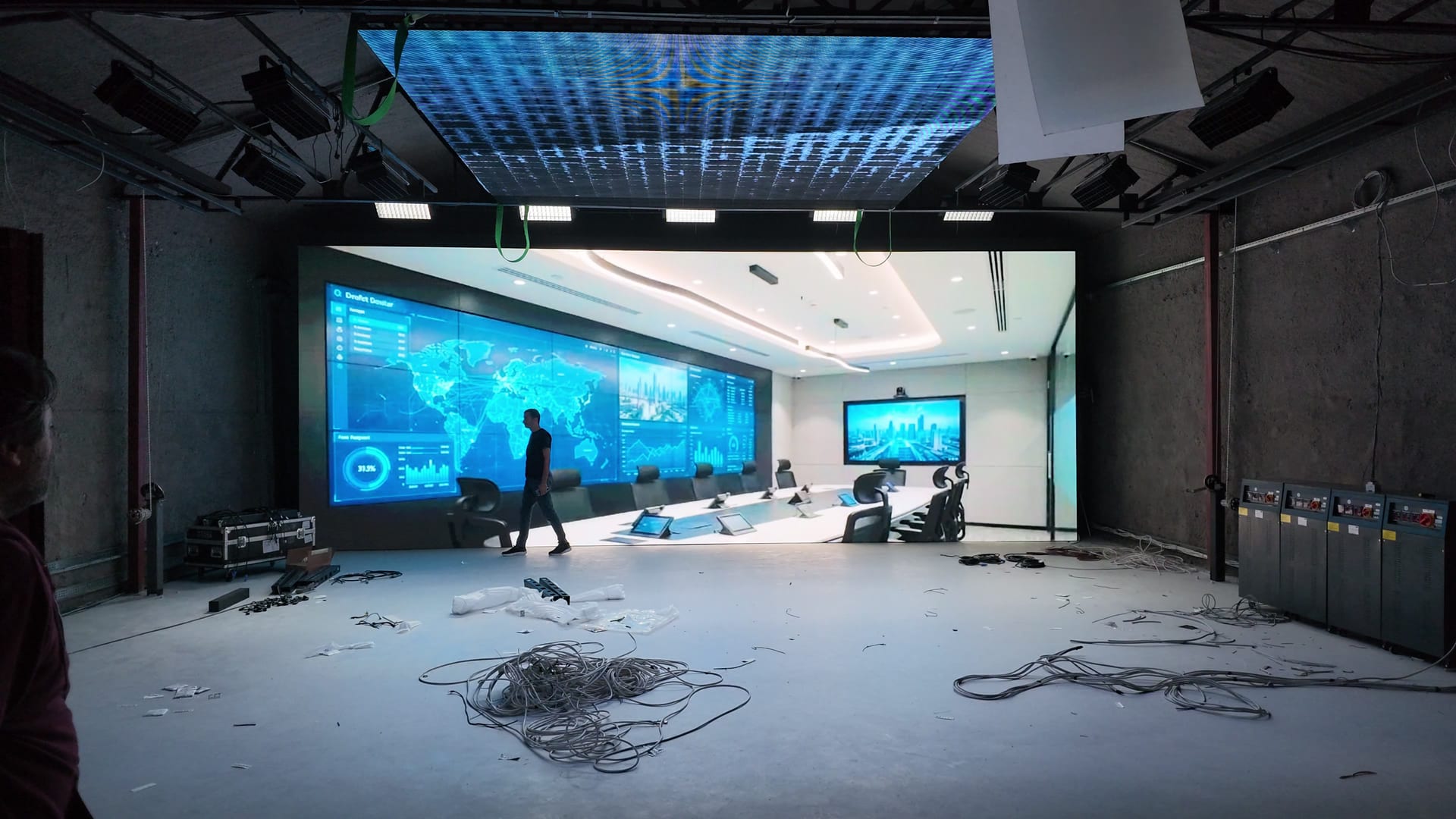
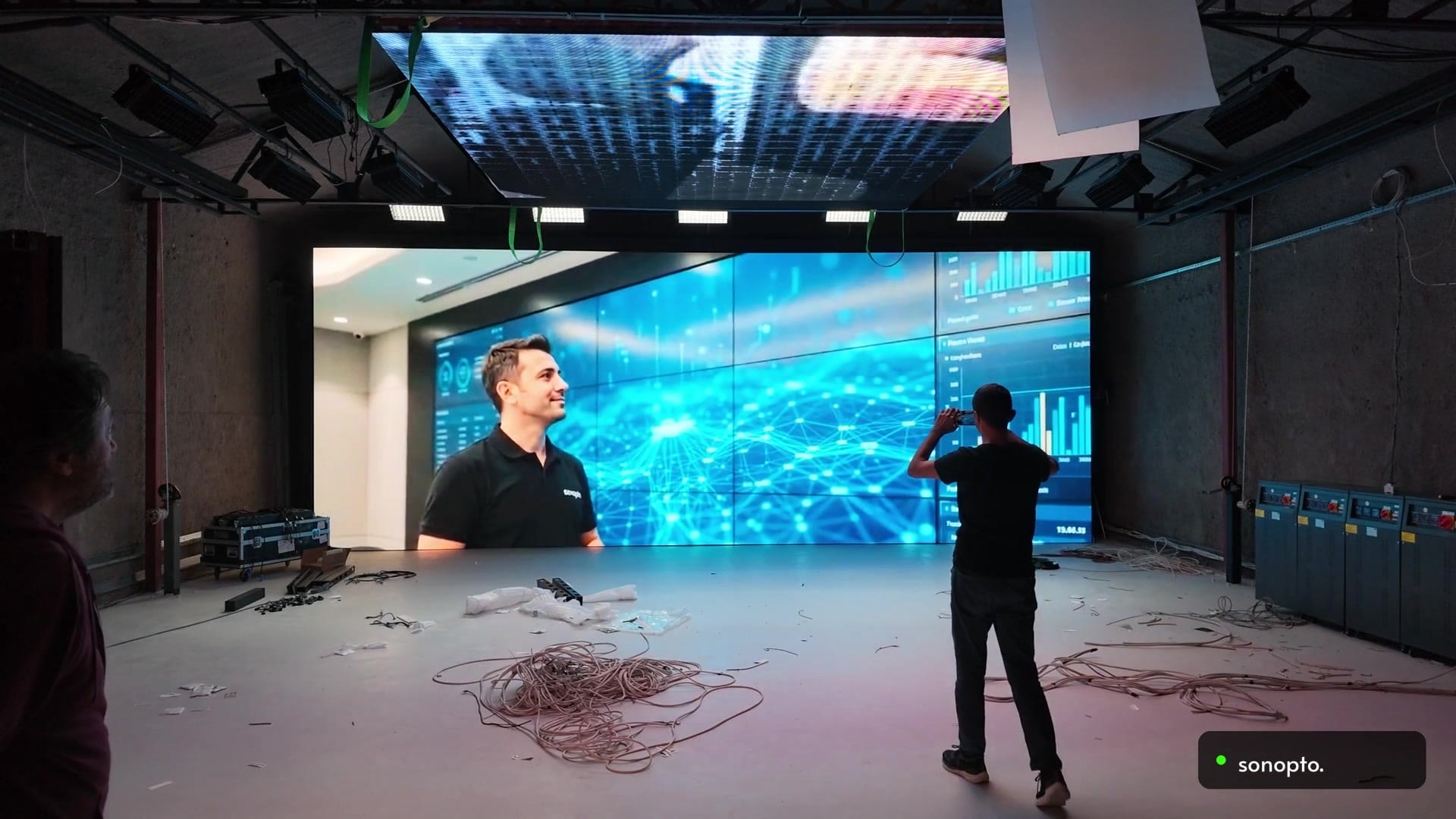
In a virtual production studio the LED wall is not merely a display surface; it is the set the camera sees. sonopto. carried out the LED screen installation, system configuration, pixel mapping and the power line regulator installation for Kule Film's XR studio.
What an XR stage asks of a screen
On an XR stage the performer works in front of a digital scene playing on the LED wall rather than a built set. As the camera moves, the perspective on the screen updates in real time, so the shot is created in camera at the moment of filming. Unlike a green screen, this in-camera VFX (ICVFX) approach delivers correct reflections and correct light on the set itself.
The demands this places on the screen are severe: panel alignment, colour consistency and refresh behaviour all have to be as good as the camera can see. A deviation that would go unnoticed on a meeting-room screen ends up in the footage here.
Scope
- Installation of the LED wall and LED ceiling panels
- Screen configuration and pixel mapping
- Colour, brightness and gamma calibration
- Power line and regulator installation
Installation process
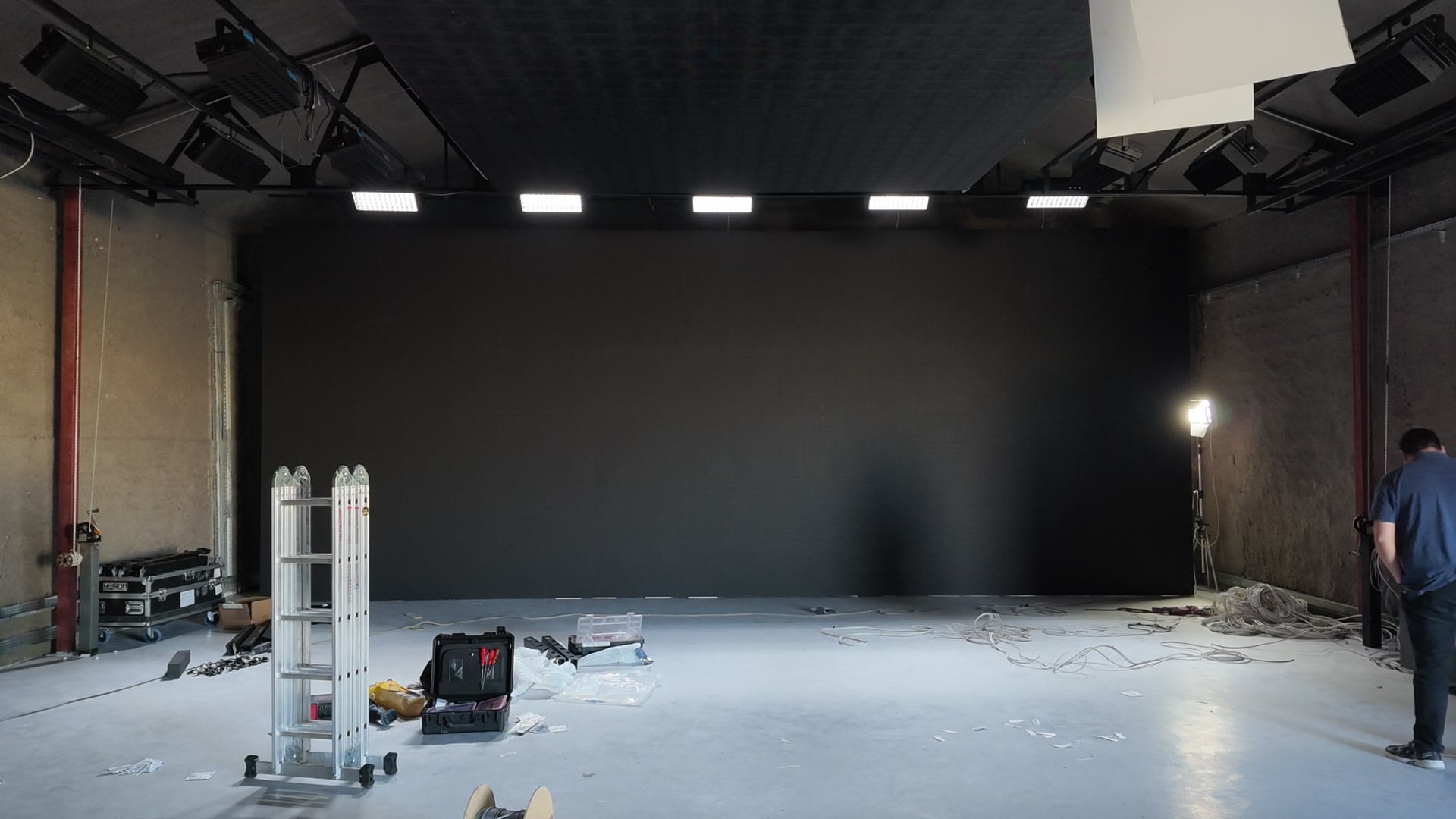
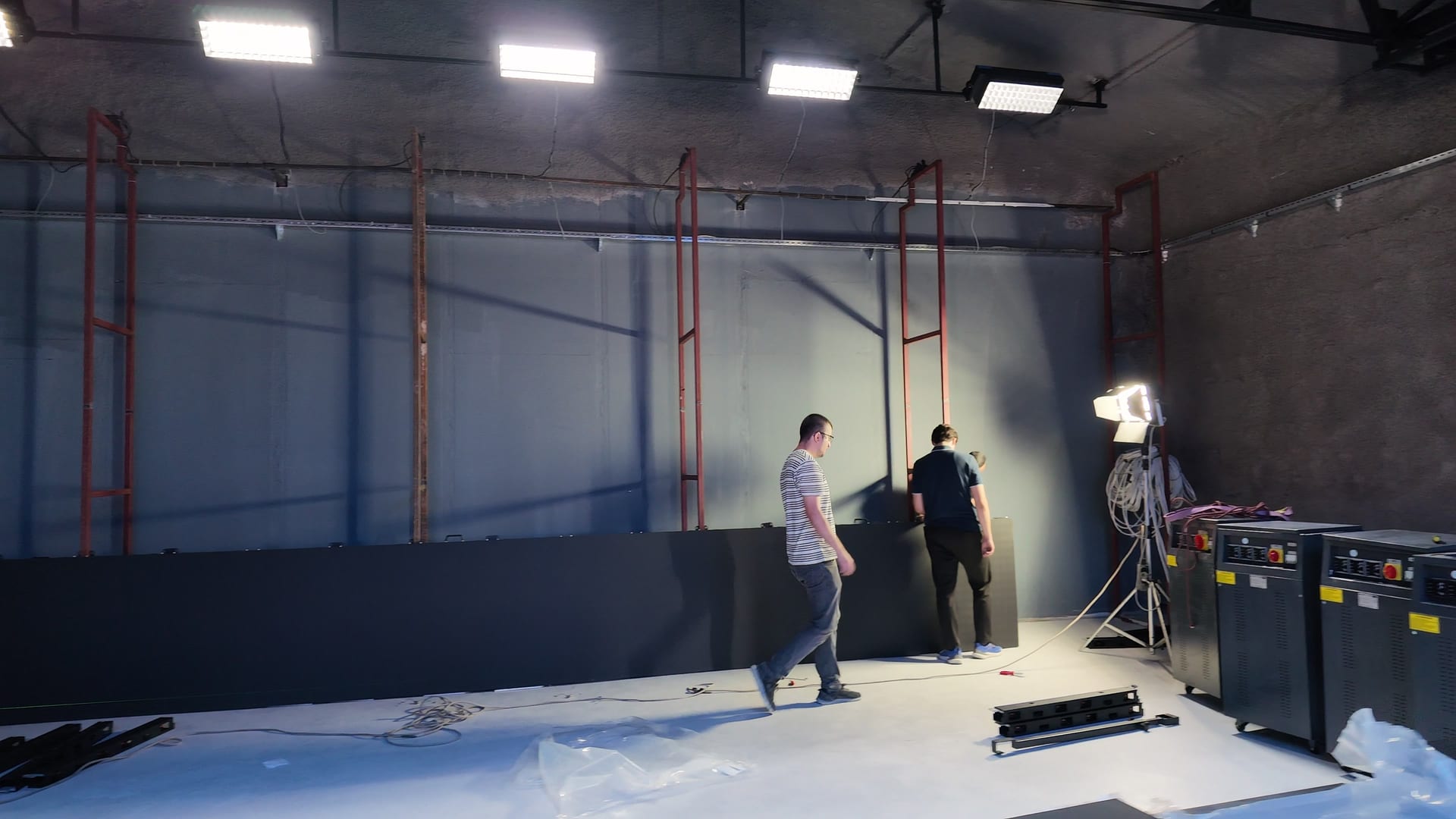
- Preparing the volume: before the panels arrived, the support line, rigging points and cable routes were prepared, with the wall and ceiling surfaces planned together.
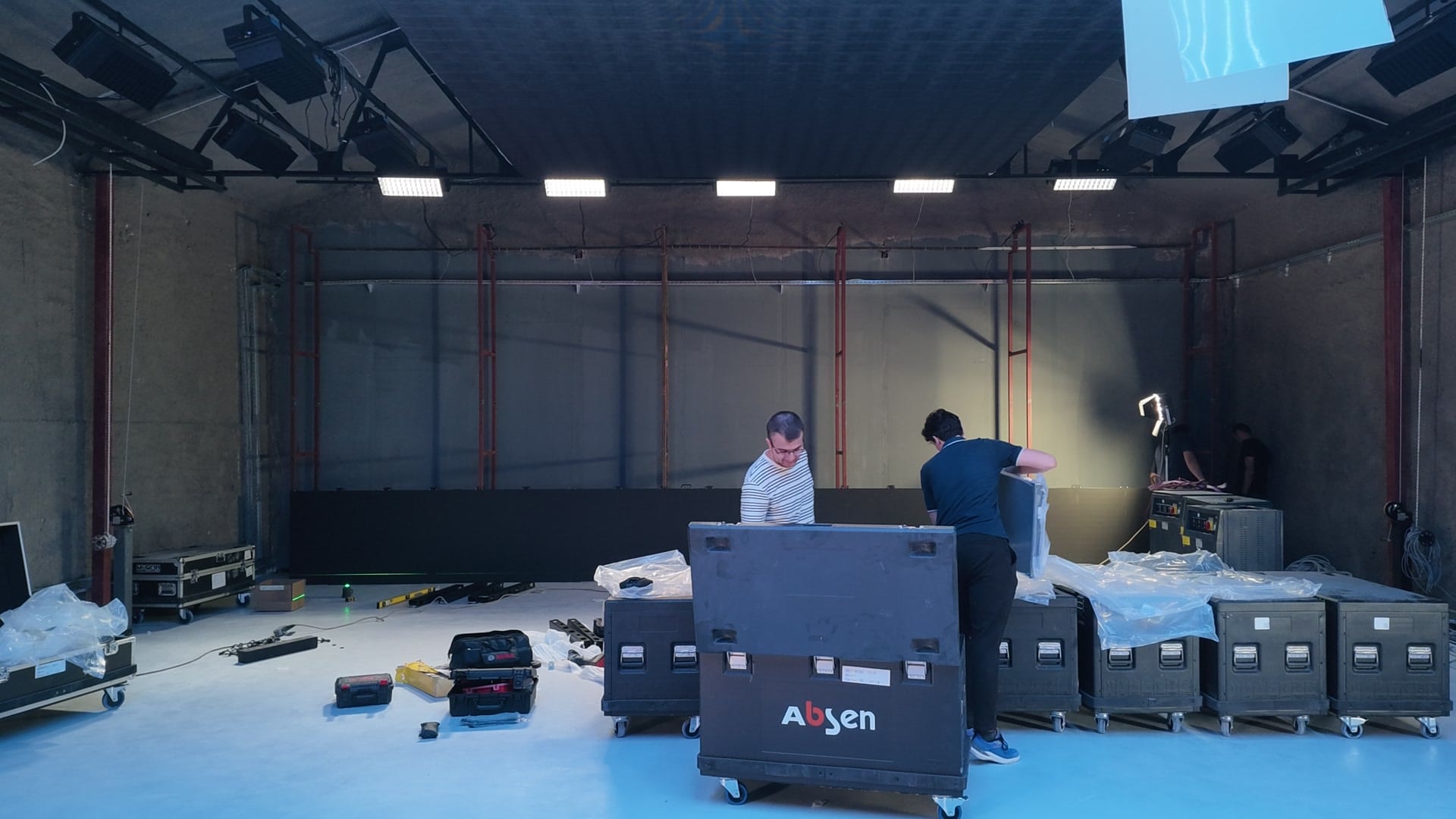
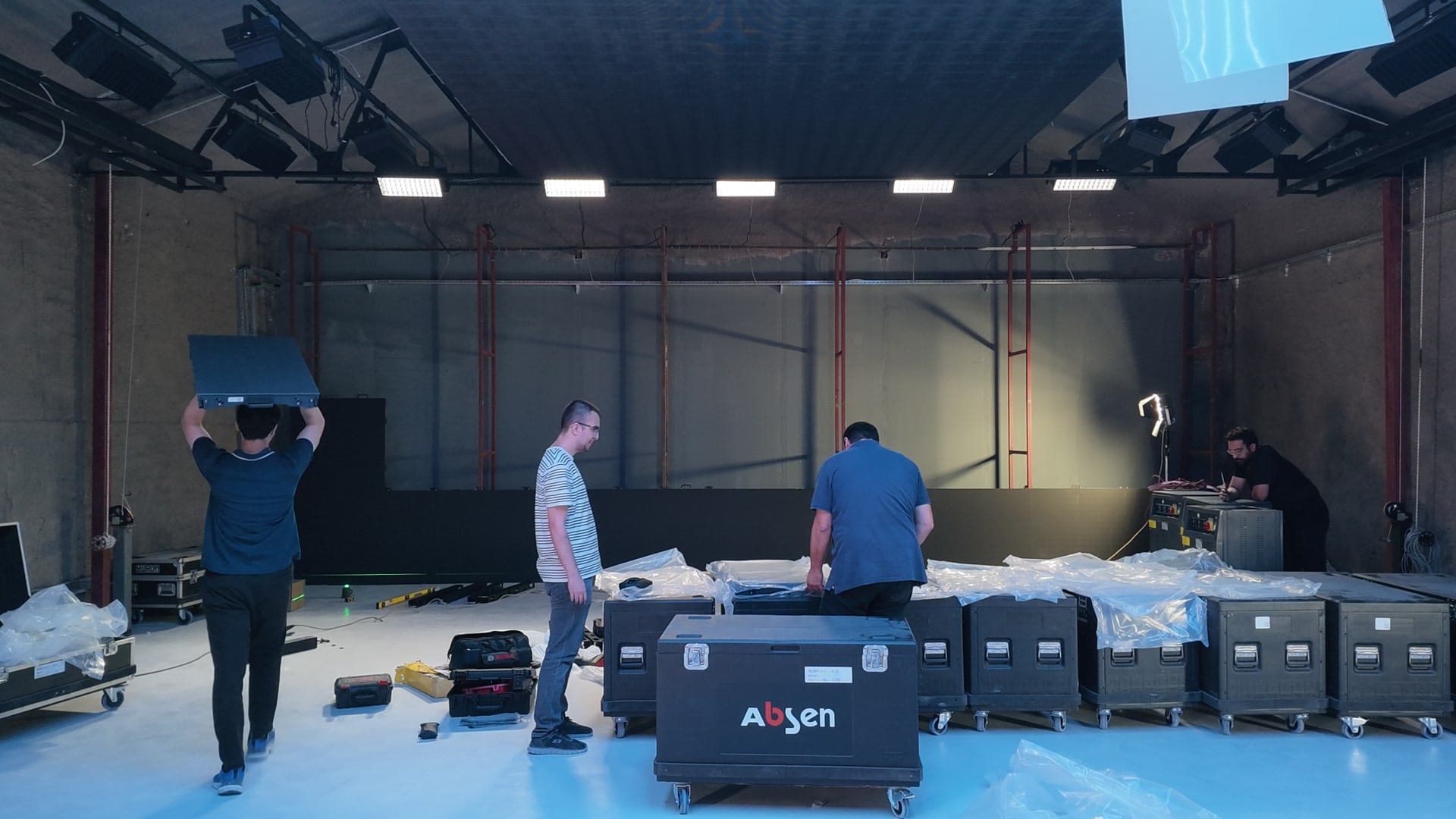
- Panel installation: the Absen panels were unpacked and set row by row. On a modular surface the first row sets the alignment for everything above it, so the bottom row was levelled before the rest followed.
- Power line and regulator: a dedicated supply line was run for the screen and fed through regulators.
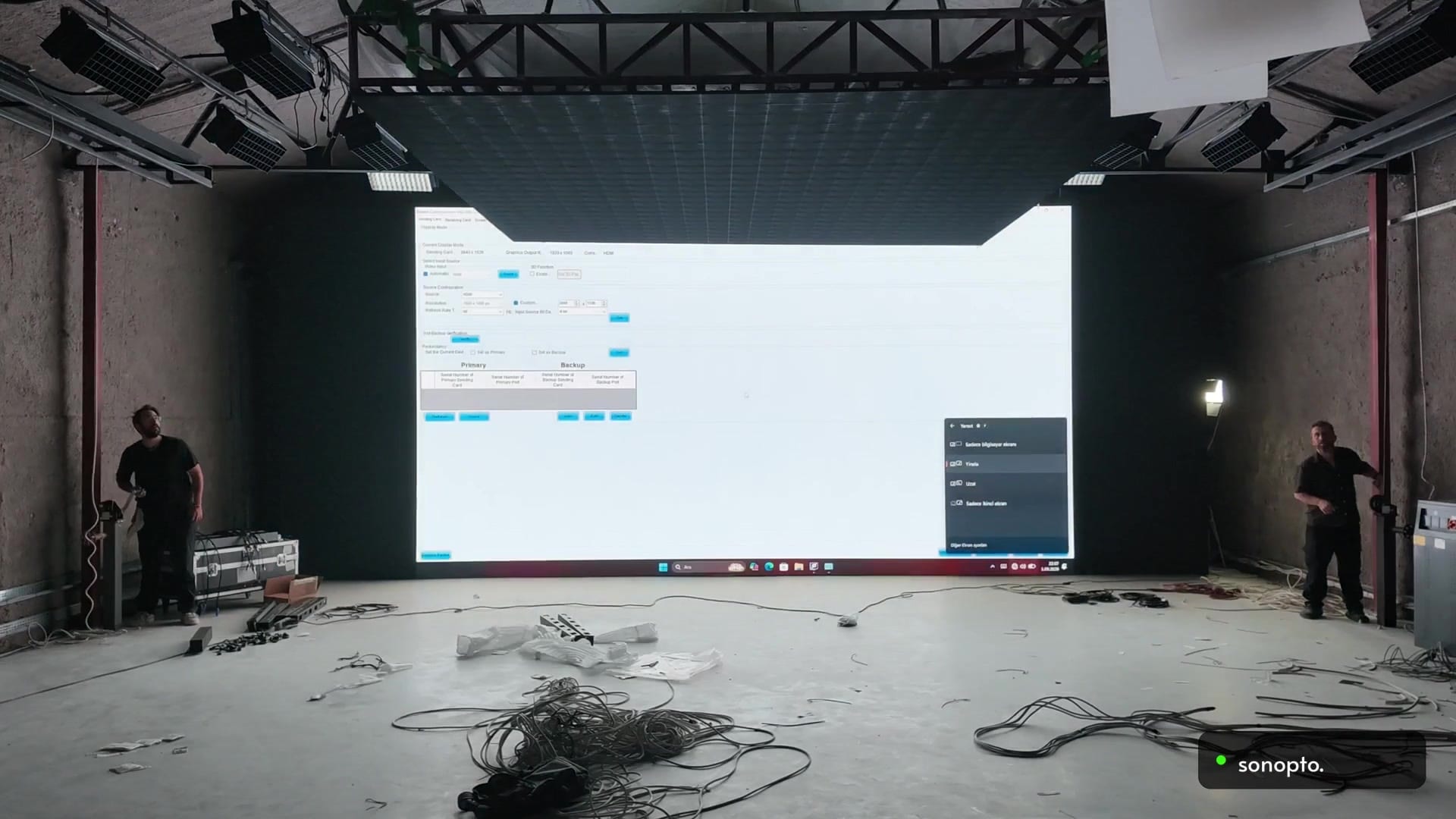
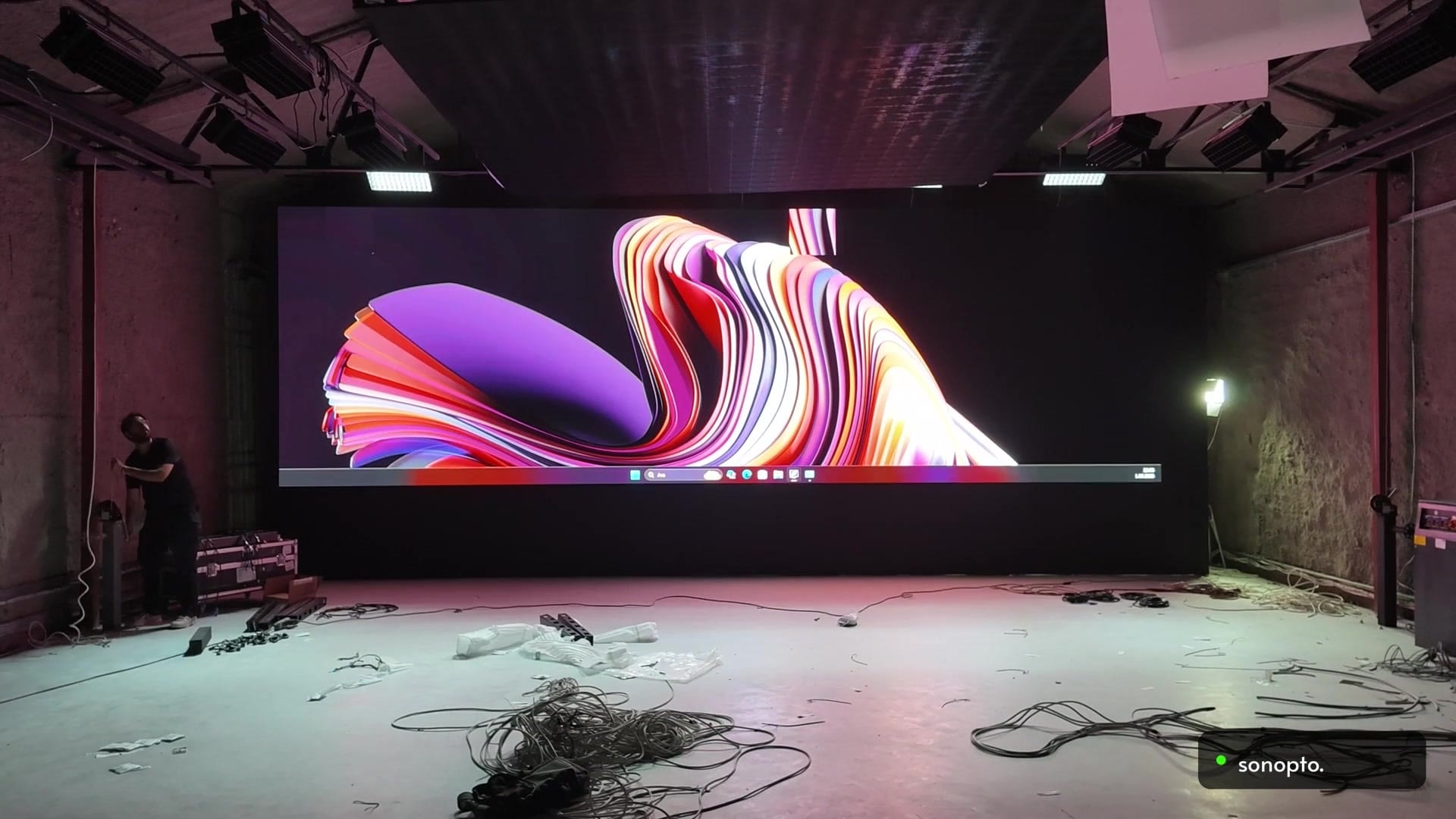
- Configuration and pixel mapping: each cabinet's place in the signal chain was matched one to one with its physical position on the screen, and the wall and ceiling were configured as a single coordinated image surface.
- Calibration and commissioning: colour temperature, brightness and gamma were measured and matched in front of the camera, and the system was handed over for shooting.
Why a regulated power line?
An LED wall needs a steady, continuous supply. On a line where voltage fluctuates, brightness shifts and the panel drivers are put under strain — both of which are unrecoverable during a shoot, because the image is being recorded to camera as it happens. Feeding the screen from its own line through a regulator keeps grid variation out of the frame.
What pixel mapping is for
Once the panels are physically in place the work moves to the controller. If each cabinet's order in the signal chain is not matched to its real position on the screen, the image does not lay out across the surface correctly: sections swap places and the scene falls apart. Pixel mapping establishes that correspondence and lets the wall and the ceiling behave as parts of one scene.
Result
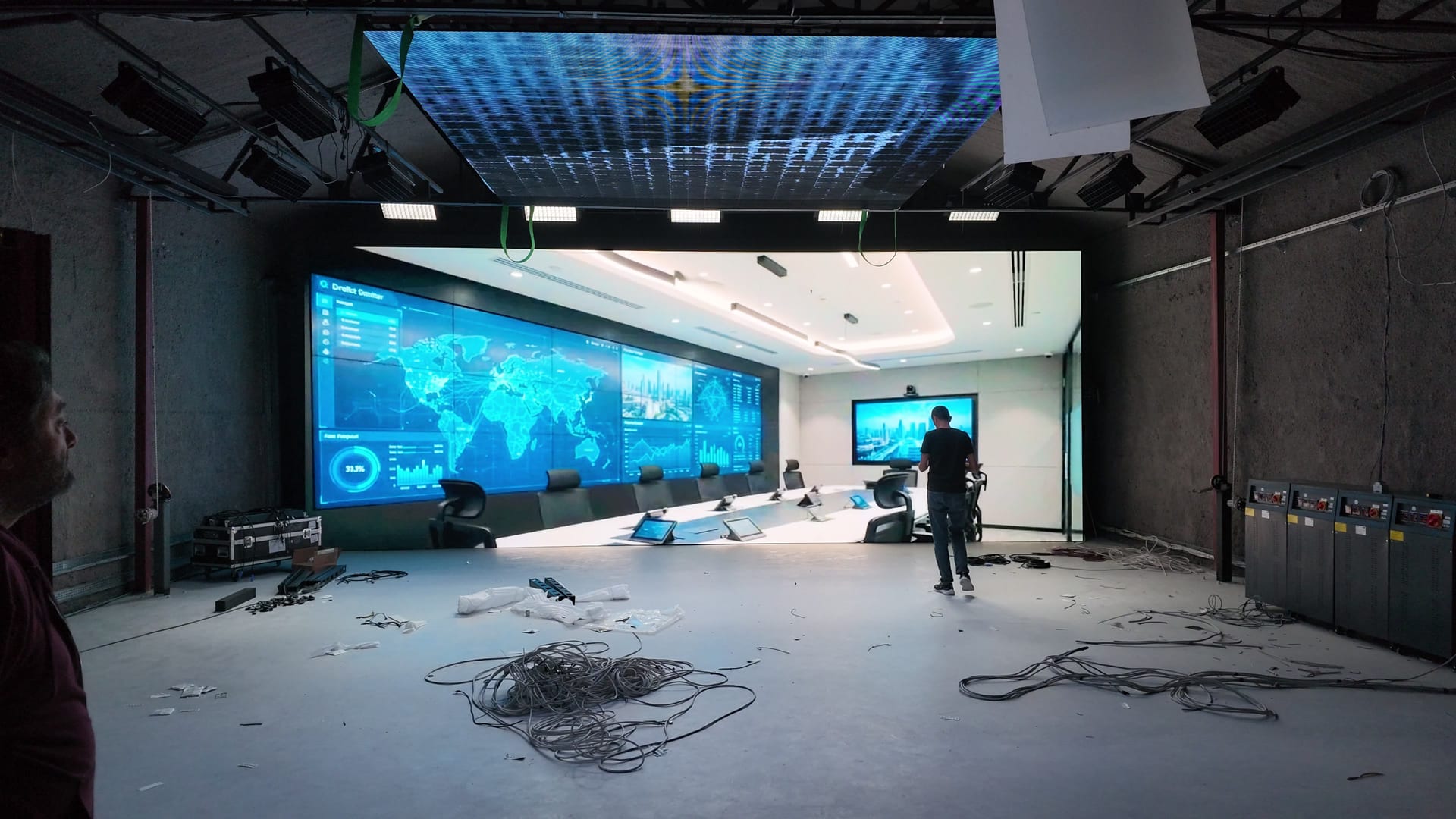
The studio was commissioned for ICVFX shoots, productions with virtual sets and live broadcasts. Driving the wall and the ceiling together produces a volume in which correct light and correct reflections fall on the performer.
- Müşteri
- Kule Film Stüdyosu
- Lokasyon
- Ankara
- Panel Markası
- Absen
- Kapsam
- LED duvar ve tavan montajı, konfigürasyon, piksel haritalama, enerji hattı regülatör kurulumu
- Tarih
- Eylül 2026
Frequently Asked Questions
What is the difference between an XR stage and a green screen?+
With a green screen the background is added after the shoot, so the light and reflections falling on the performer are not present on set and have to be imitated later. On an XR stage the scene plays on the LED wall in real time, the perspective updates as the camera moves, and the shot is formed in camera. The performer is genuinely inside that light, and reflections on glass, metal and wet surfaces come out right.
What is pixel mapping?+
A modular LED screen is made of cabinets chained together. Pixel mapping is the work of matching each cabinet's order in the signal chain to its real physical position on the screen. If that correspondence is wrong the image does not lay out across the surface and sections swap places. Two surfaces such as a wall and a ceiling showing one scene together also depends on this mapping.
Why does an LED wall need a regulated power line?+
LED panels need a steady, continuous supply. When the voltage fluctuates the brightness shifts and the panel drivers are strained. In virtual production this matters especially, because the image is recorded to camera as it happens and there is no chance to correct it later. Feeding the screen from its own line through a regulator keeps grid variation out of the frame.
Can an XR volume be built into an existing studio?+
Yes. What decides it is the space itself: ceiling height, the rigging capacity of the structure, the distance between camera and wall, and whether the existing electrical infrastructure is adequate. We assess those four during the site survey and size the volume and choose the panels accordingly.
What does sonopto. take on in an XR studio installation?+
The whole of the field side: panel installation, support and rigging work, cabling, power line and regulator installation, controller configuration, pixel mapping, colour and brightness calibration, and commissioning. Post-installation maintenance and panel replacement are also among the services we provide.