Maintenance does not begin when something breaks
We work from Ankara and maintain systems across Turkey — including ones we did not install. The aim is simple: see the fault before you do, and fix it without stopping the system.
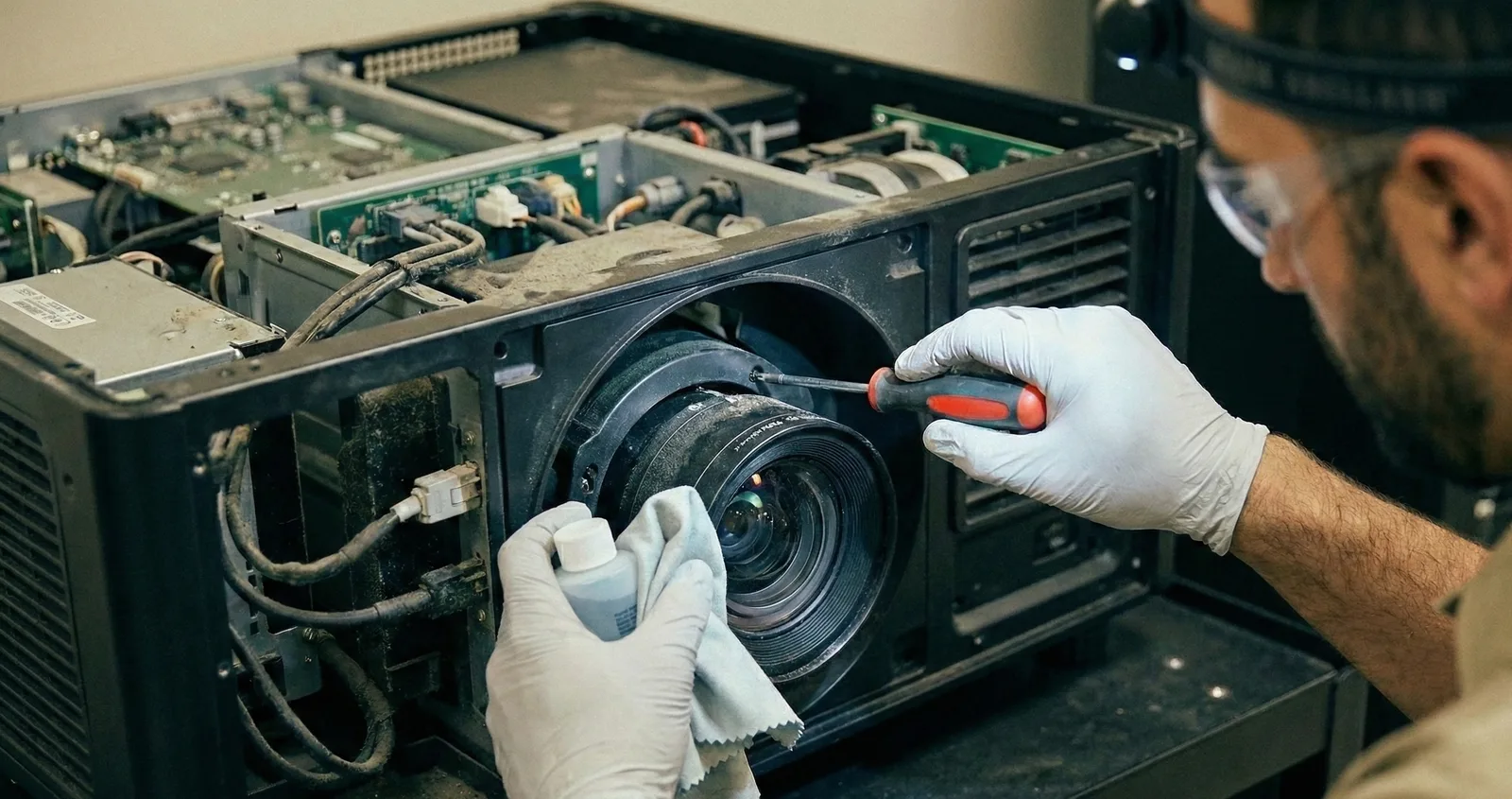
- Maintenance and repair for your entire AV inventory — including systems out of warranty or installed by another company
- Scheduled Maintenance Agreements: annual contracts with 24/7 coverage
- Emergency Response: fast on-site service for critical faults
- Spare Parts & Repair: projector lamp replacement, amplifier repair, cable renewal
What we maintain
LED screens and video walls, conference and meeting room display systems, professional audio, projection, signal distribution and control infrastructure. We do not have to have installed it: on a system we take over we survey it first, then build the maintenance plan from what we find.
What a periodic visit covers
On LED: module and cabinet checks, verification of brightness and colour calibration, temperature checks on power supplies and receiving cards. On projection: air filter and vent cleaning — the first place to look on a projector that shuts itself down, and the job nobody puts in a calendar after handover. On audio: connection and grounding checks, and re-measuring loudspeaker and microphone levels. Across every networked device: a review of firmware versions.
When something does break
Clients under a maintenance agreement get priority response; the time depends on the scope of the agreement and the location, and is set out in writing in the contract. We prioritise by impact: a fault that has stopped a system and a single dark module are not equally urgent. Spares decide a great deal here — a replacement LED module should come from the same production batch as the wall, because a different batch produces a visibly different white. We recommend buying them at installation so nobody is colour-matching during an outage.
Seeing the fault before you do
Remote monitoring tools now see beyond their own brand: a room device that has gone offline, a camera that has lost its connection, stale firmware or an abnormal temperature can all be caught before anyone walks into the room. What monitoring cannot catch: echo, degraded acoustics, drifting calibration. So we run remote monitoring and planned site visits together — neither replaces the other.
What maintenance prevents
The cost of an AV fault is rarely the repair. It is the meeting that did not happen, the event that stopped, the hall that could not be used. The useful part is that most of these faults announce themselves first: a projector filter starting to clog, a power supply running hot, calibration drifting, firmware falling behind. Periodic maintenance is simply looking at those before one of them becomes the thing that stops a meeting. We do not quote a percentage from our own service records — we have not yet accumulated enough of them to make an honest number, and we would rather say so than borrow another sector's average.
We are based in Ankara and carry out installation, maintenance and commissioning across Turkey.
Frequently Asked Questions
You did not install our system. Will you still maintain it?+
Yes. On a system we take over we survey it first: what was installed, what condition it is in, what spares exist. The plan and the pricing follow from that survey.
How often should maintenance happen?+
It depends on how hard the system is used and on the environment. A meeting room in daily use and an exhibition screen that runs seasonally do not want the same calendar. LED screens in humid environments need particular care: a screen left off for a long period can be damaged permanently if it is not brought back up gradually from low brightness.
Do you support systems with no maintenance agreement?+
We do, but the queue and the committed times favour contracted clients. In an urgent fault that is the difference that matters most.
Is the security of networked devices part of maintenance?+
Yes. Networked microphones, cameras, DSPs and control panels create real attack surface through default passwords and stale firmware. Firmware tracking is a separate line in our maintenance agreements — "if it works, don't touch it" does not hold on the security side.
Our Other Services
Installation & Assembly
From site survey to cable management, from aesthetic mounting to calibration. Wrong placement and missing infrastructure turn into expensive rework later.
Read MoreConsulting
We provide technical support from architectural design through the tender process to deliver the most sustainable, efficient solution for your needs.
Read MoreSales & Supply
Through our extensive distributor network, we source the equipment and spare parts your service and installation projects need on the best terms.
Read More