Transport and Terminals
Put the Wait to Work
A screen in a transport hub has two jobs: send the passenger to the right place, and turn the wait into something of value. The second is revenue most operators leave on the table.
Passenger flow never stops, so there is no window to take a screen down
Terminals run around the clock, and there is almost never a convenient hour to switch a display off and work on it. That makes the critical factor not the brand of the screen but how long it runs without failing and how quickly it comes back when it does. Remote monitoring — seeing the fault before a passenger does — shrinks the response window from hours to minutes.
What goes on the screens?
- Service and platform information: departures, arrivals, delays and platform changes
- Wayfinding: exits, interchanges, baggage and step-free access
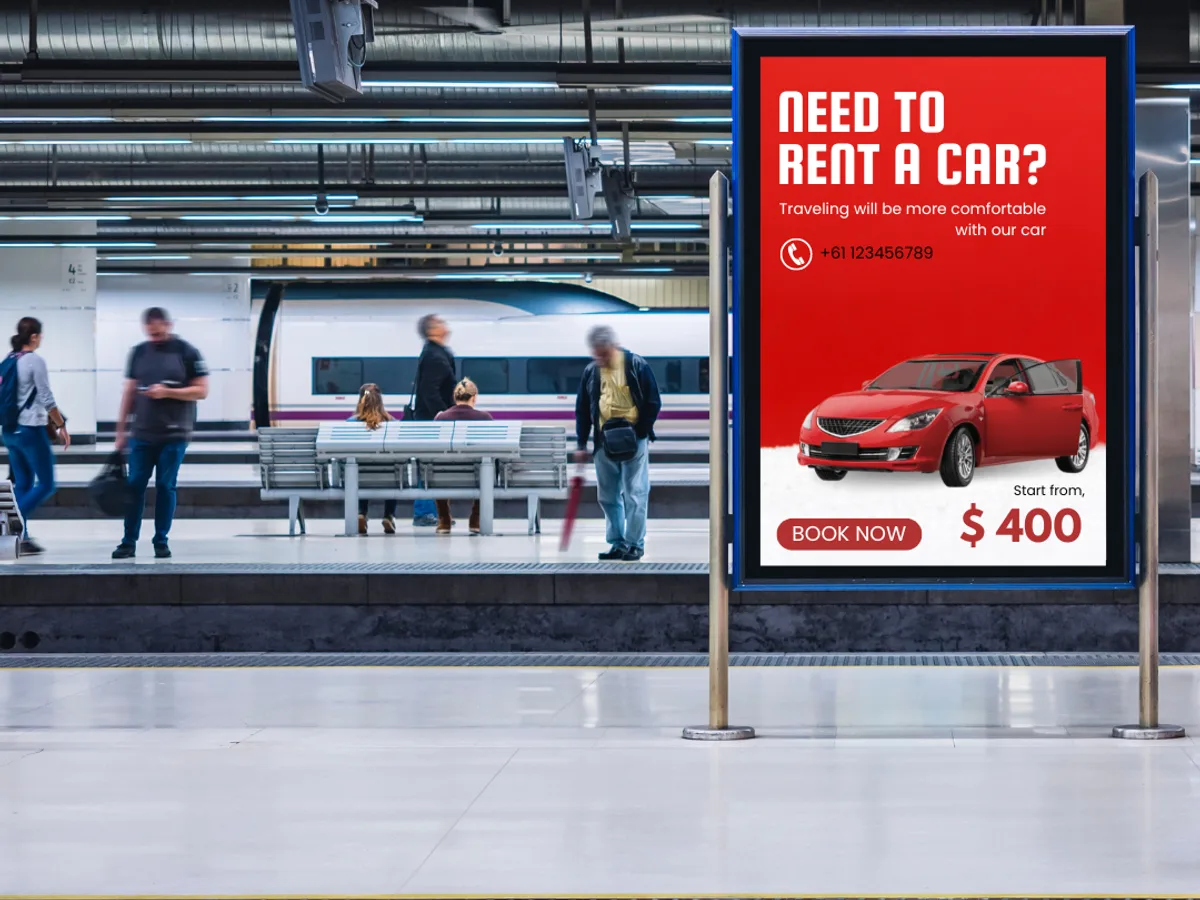
- Advertising: platform and concourse screens run as rentable broadcast inventory
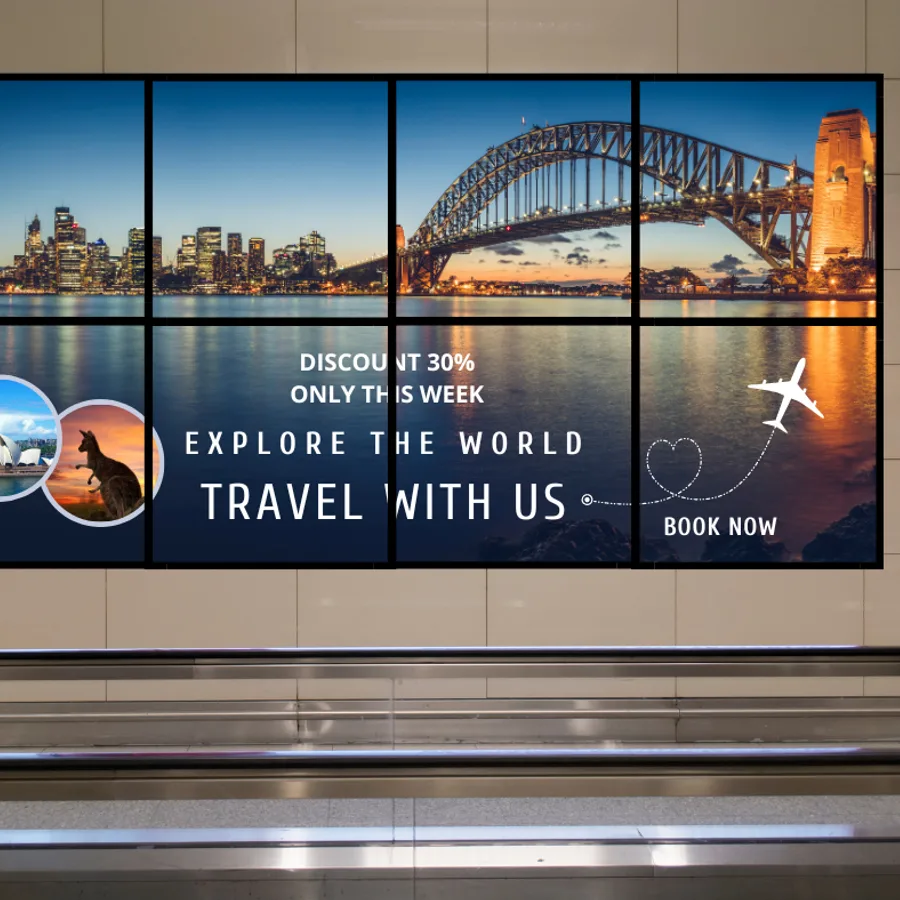
- Video walls: large-format corporate content in entrance halls and interchanges
- Emergency information: evacuation guidance and support for public address
What really matters here: offline operation and screen grouping
Connectivity is never uniform across a terminal estate. Because media downloads to each screen’s local storage, a dropped line does not stop playback. Grouping lets you run platform screens as one group and concourse screens as another, so service information goes only to the relevant platform while corporate content goes estate-wide. On video walls, synchronised playback keeps adjacent panels behaving as a single image.
What difference does it make that we install the screen?
Installation in a transport hub is structural work: mounting to high ceilings, safe steelwork in the middle of heavy passenger flow, and positioning set by sight lines in an enclosed space. A video wall demands millimetre alignment — one panel seated slightly off and the whole wall looks crooked. We do this with our own team, covering steel fabrication, data and power infrastructure in a single scope.
Frequently Asked Questions
Can we feed service information from our existing system?+
If that data can be exported as a spreadsheet, CSV, JSON or a web page, it can be connected to the screens. We look at what your current system exposes during the survey and confirm whether integration is possible before committing to it.
Do you install video walls?+
Yes. LED walls and multi-screen video walls are a substantial part of our work: steel fabrication, data and power infrastructure and the installation itself are ours. On the software side, synchronised playback makes the panels run as one image.
Can the screens be used for advertising revenue?+
Yes, and it is a common use. Grouping screens by zone and time lets you sell different slots to different advertisers, and remote monitoring lets you verify that the campaign actually played.
Other Sectors
Everything about sonopto.signage →Retail and Shops
Window and aisle displays, one panel for the whole branch network, content that changes automatically on the campaign calendar.
Read More →Restaurants and Cafés
Digital menu boards, menus that switch automatically through the day, prices driven from a spreadsheet and no reprinting.
Read More →Corporate Offices
Welcome displays, room booking screens at the door, internal communication boards and a company-wide announcement network.
Read More →Schools and Campuses
Corridor and canteen announcement screens, library information, exam and event calendars, campus wayfinding.
Read More →Healthcare
Queue and wayfinding displays, clinic information, waiting area content and consultant schedule screens.
Read More →Let’s Talk About Your Screens
Tell us how many screens you have and where you want to use them. We will scope it with you and prepare the right setup and quote.
Request a Free Site Survey